
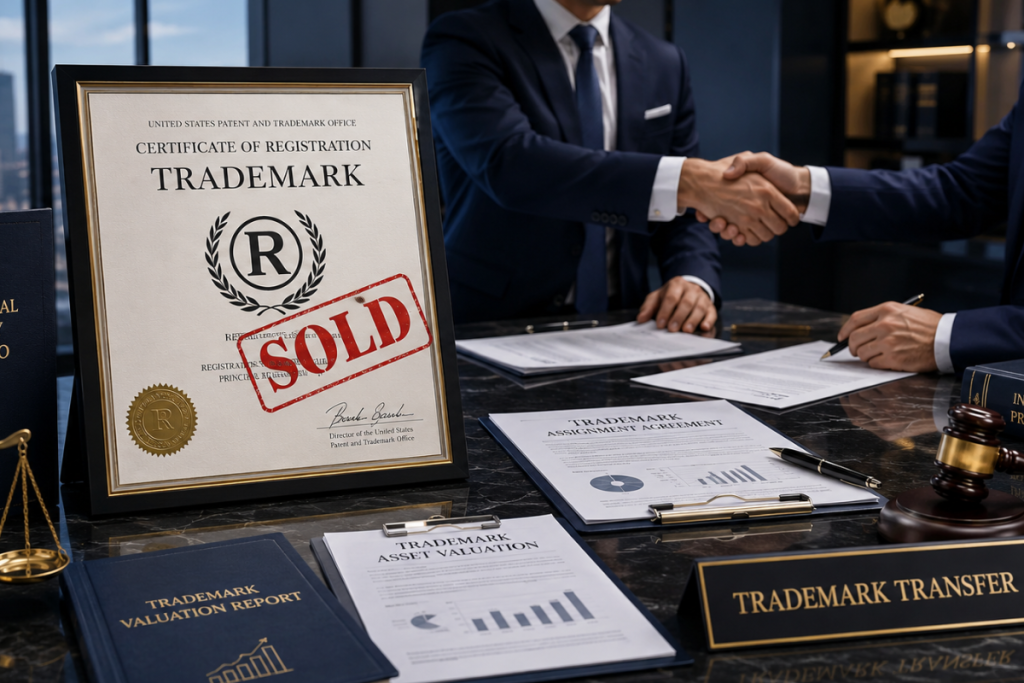
If you own a registered trademark that no longer fits your business strategy, you may be wondering whether you can sell it and how the process works.
The short answer is yes.
A registered trademark can often be sold legally through a trademark transfer process, allowing business owners to monetize intellectual property instead of leaving it unused. Whether you own an unused brand, a dormant trademark, or a valuable registered mark, selling it can unlock hidden business value.
In this guide, you’ll learn exactly how to sell a registered trademark, what affects trademark value, how trademark ownership transfer works, and how businesses can sell trademarks securely.
What Does It Mean to Sell a Registered Trademark?
Selling a registered trademark means legally transferring trademark ownership from one party to another through a trademark assignment or ownership transfer process.
In simple terms, a trademark is considered intellectual property and can often be treated as a business asset.
This means trademark owners may sell:
- Business brand names
- Registered logos
- Product trademarks
- Company brand identities
- Amazon-ready trademarks
- EU trademarks
- German trademarks
Many companies buy existing trademarks because it allows faster market entry compared to waiting for a new registration process.
For example, businesses entering Germany or Europe may prefer buying a registered trademark to speed up brand expansion.
Why Business Owners Sell Trademarks
There are many reasons why a business owner may decide to sell a trademark.
Common situations include:
1. Rebranding a Business
When companies change names or reposition themselves, older trademarks may become unused assets.
Rather than paying renewal fees for inactive intellectual property, businesses often choose to sell trademarks.
2. Business Closure
Closing a business does not necessarily mean the trademark loses value.
A registered trademark may still be attractive to startups, investors, or international businesses entering the same market.
3. Market Exit
Companies leaving a country or industry sometimes sell trademarks to recover business value.
This is especially common when businesses exit Germany or European markets.
4. Unused Trademark Portfolios
Many companies own multiple trademarks they no longer actively use.
Selling dormant trademarks can transform unused assets into capital.
Step-by-Step: How to Sell a Registered Trademark
Selling a trademark becomes easier when approached systematically.
Step 1: Review Your Trademark Registration
Before selling, confirm your trademark details.
Ask yourself:
- Is the trademark registered?
- Which trademark classes apply?
- Is the registration active?
- Are renewals current?
- Is there any legal dispute?
The stronger the legal standing, the easier the sale process becomes.
A registered trademark with clear ownership records tends to attract more qualified buyers.
Step 2: Understand Your Trademark’s Value
Not all trademarks are worth the same amount.
Trademark value depends on several factors.
Key valuation considerations include:
- Brand memorability
- Industry demand
- Trademark age
- Geographic coverage
- Germany or EU registration status
- Commercial relevance
- Existing recognition
For example, a short and memorable trademark in a competitive industry may hold significantly more value than a generic name.
If you are unsure about pricing, getting trademark valuation guidance can help establish realistic expectations.
Step 3: Find Potential Buyers
Finding the right buyer is one of the most important steps in selling a trademark.
Potential buyers may include:
- Startups
- Amazon sellers
- International businesses
- Investors
- E-commerce brands
- Companies expanding into Germany
Businesses entering European markets often look for ready-made trademarks because it helps reduce registration waiting times.
This is why trademark marketplaces and trademark brokers can play an important role in connecting sellers with serious buyers.
Step 4: Negotiate the Sale
Once a buyer is interested, negotiations begin.
Important considerations may include:
- Purchase price
- Payment structure
- Ownership rights
- Trademark classes included
- Geographic rights
- Brand-related assets
A clear agreement reduces confusion later.
This stage is often easier when both parties understand the commercial value of the trademark.
Step 5: Complete the Trademark Transfer Process
The final step involves legally transferring ownership.
Trademark ownership transfer usually requires assignment documentation and official filing procedures depending on the country.
The process may include:
- Transfer agreement
- Ownership verification
- Assignment filing
- Registry updates
- Administrative coordination
Because requirements differ between jurisdictions, proper transfer coordination helps reduce unnecessary delays.
Common Challenges When Selling a Trademark
Selling a trademark is not always straightforward.
Here are some common obstacles business owners face.
Pricing Too High or Too Low
Many sellers either overestimate or undervalue their trademarks.
A realistic valuation helps improve transaction success.
Finding Serious Buyers
Not every inquiry leads to a transaction.
Buyer matching matters because qualified buyers typically understand trademark value better.
Legal Uncertainty
Many business owners hesitate because they are unsure whether trademark selling is legal.
In many cases, registered trademarks can legally be transferred through a documented process.
International Expansion Complexity
Cross-border trademark sales may involve additional legal and administrative considerations.
Businesses entering Germany or Europe may require trademark transfer support.
Can Foreign Companies Buy German Trademarks?
Yes, in many situations, foreign businesses can buy registered German trademarks.
This is particularly relevant for companies from:
- India
- China
- Switzerland
- Austria
- International Amazon businesses
Buying an existing trademark can help companies accelerate market entry and reduce registration waiting periods.
This is one reason why demand for registered trademarks in Germany continues to grow.
Should You Use a Trademark Marketplace or Broker?
If your goal is to maximize visibility and reach qualified buyers, using a trademark marketplace can improve opportunities.
Benefits may include:
- Access to buyers
- Trademark visibility
- Valuation support
- Buyer matching
- Transfer coordination
- International opportunities
For many sellers, marketplaces reduce friction and simplify the trademark selling process.
Can I legally sell a registered trademark?
Yes. Registered trademarks can generally be sold through an ownership transfer or assignment process depending on legal requirements.
How long does trademark transfer take?
Timelines vary depending on the country, documentation, and registry procedures.
Can I sell an unused trademark?
Yes. Many unused trademarks still have commercial value, particularly for startups and expanding businesses.
What affects trademark value?
Trademark value depends on demand, memorability, registration quality, market potential, and legal strength.
Can international buyers purchase German trademarks?
Yes. Foreign businesses may often acquire German trademarks depending on local requirements.
Selling a trademark can be a strategic way to monetize intellectual property while helping another business enter the market faster.
Whether you own an unused trademark, a registered German trademark, or a dormant EU brand, understanding the trademark transfer process helps reduce risk and improve outcomes.
If you are considering selling a registered trademark, professional support can help simplify valuation, buyer matching, and ownership transfer.
Ready to explore your trademark selling options?
Book a Consultation to discuss your trademark and connect with potential buyers.