
If you are building a strong brand in Europe or planning to expand into Germany, you may have heard the term 3D trademark and wondered:
What is a 3D trademark, and why is it important?
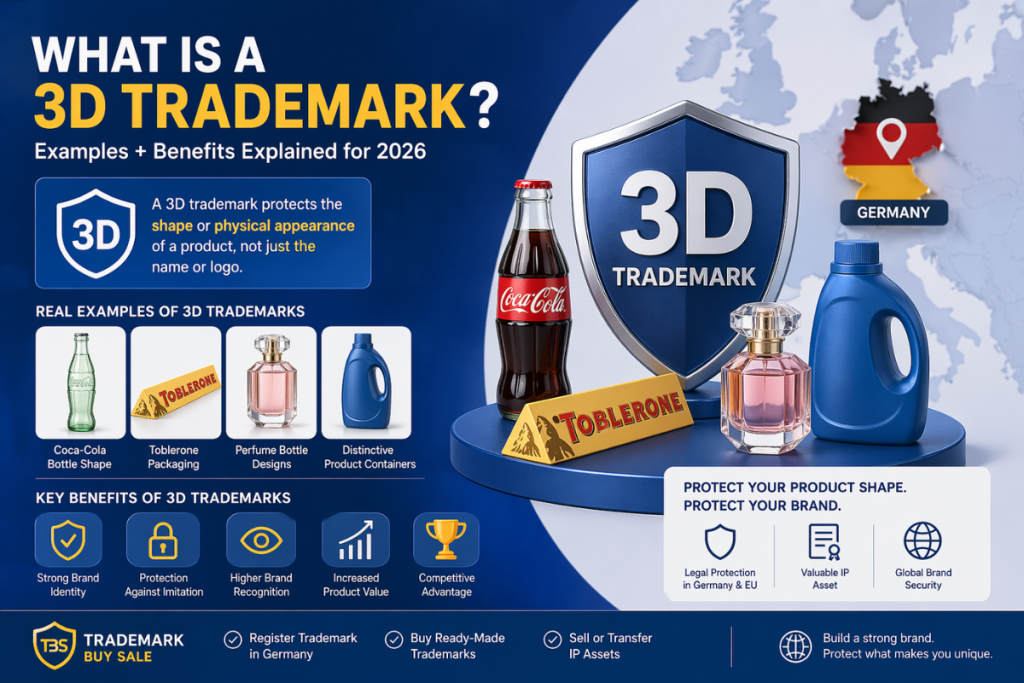
A 3D trademark is one of the most powerful but less understood types of trademarks. It protects the shape or physical appearance of a product, not just the name or logo.
In this guide, you’ll learn what a 3D trademark is, real examples, and why it matters for a trademark in Germany.
What is a 3D Trademark?
A 3D trademark (three-dimensional trademark) protects the shape, structure, or packaging design of a product.
Unlike traditional trademarks that protect names or logos, a 3D trademark protects how something looks in physical form.
👉 In simple words:
It protects the shape of your product itself.
3D Trademarks in Germany
In Germany, 3D trademarks are fully recognized under intellectual property law.
You can register:
- Unique product shapes
- Packaging designs
- Container forms
- Distinctive physical structures
👉 This gives your product exclusive visual identity protection in the market.
Real Examples of 3D Trademarks
Some of the most famous 3D trademarks include:
- Coca-Cola bottle shape
- Toblerone chocolate packaging
- Unique perfume bottle designs
- Distinctive product containers
👉 These shapes are instantly recognizable and legally protected.
Why 3D Trademarks Are Important
A 3D trademark is powerful because it protects something competitors often try to copy: the product shape.
Key benefits:
- Strong brand identity
- Protection against product imitation
- Higher brand recognition
- Increased product value
- Competitive advantage in the market
👉 This is especially useful in industries like fashion, food, cosmetics, and manufacturing.
Legal Protection of 3D Trademarks
Once registered, a 3D trademark in Germany gives you:
- Exclusive rights to the shape
- Legal protection against copying
- Ability to take legal action
- Strong EU-wide recognition (if extended)
👉 This makes it a valuable long-term business asset.
When Should You Use a 3D Trademark?
You should consider a 3D trademark if:
- Your product has a unique shape
- Your packaging is distinctive
- You want to protect physical design
- You compete in a crowded market
👉 Example: beverage, cosmetic, or luxury product brands.
Difference Between 3D Trademark and Regular Trademark
| Type | Protects | Example |
| Word Trademark | Brand name | Nike |
| Logo Trademark | Symbol/design | Apple logo |
| 3D Trademark | Product shape | Coca-Cola bottle |
👉 Each protects a different part of your brand identity.
Limitations of 3D Trademarks
Not every shape can be registered.
Restrictions include:
- Functional shapes (if required for use)
- Common or generic designs
- Basic packaging forms
👉 The shape must be distinctive and unique.
Can You Buy a 3D Trademark in Germany?
Yes, and this is an advanced business strategy.
You can:
- Buy a trademark in Germany that includes 3D protection
- Acquire ready-made registered IP assets
- Avoid long registration processes
- Enter the EU market faster
👉 This is useful for product-based businesses.
Can 3D Trademarks Be Sold or Transferred?
Yes, 3D trademarks are valuable intellectual property assets.
You can:
- Sell them
- Transfer ownership
- License the design
👉 This makes them useful for business expansion and brand monetization.
A 3D trademark is one of the most powerful forms of brand protection because it secures the physical identity of your product.
In competitive markets like Germany and Europe, protecting not just your name but also Search Trademark your product shape can give you a strong advantage.
- Names protect identity
- Logos protect branding
- 3D trademarks protect product design
👉 Together, they build a strong and defensible brand.
Protect Your Brand Completely
If you want to:
- Register a trademark in Germany
- Protect your product design
- Buy a ready-made trademark
- Sell or transfer IP assets
👉 Trademark Buy Sale helps you secure full intellectual property protection globally.
Start today and build a powerful brand with full legal protection.