
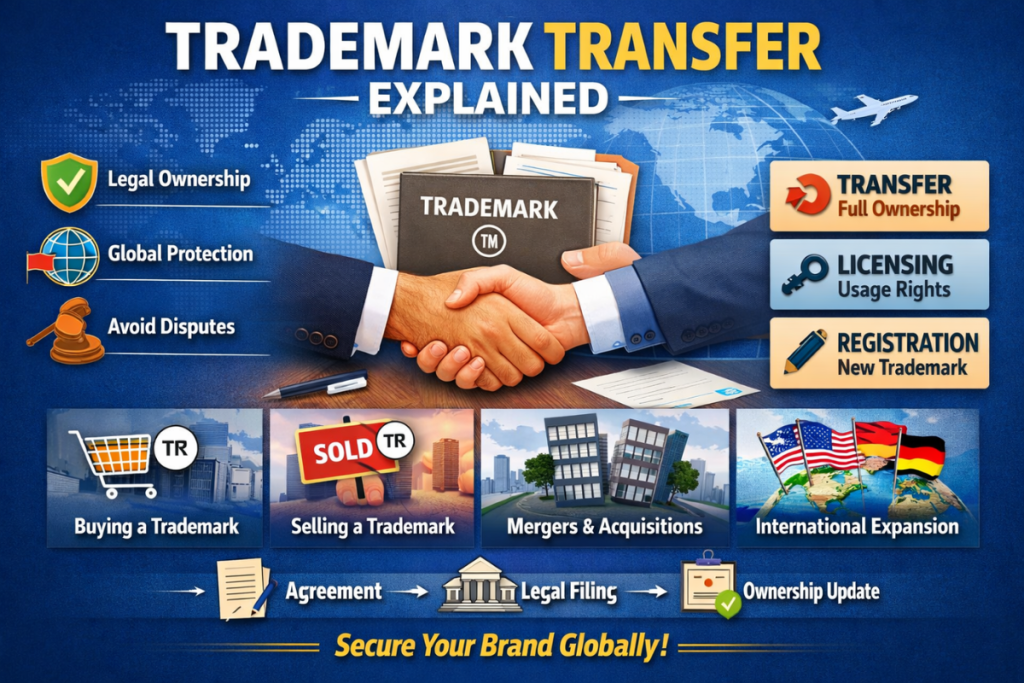
A trademark transfer is the legal process of transferring ownership of a registered trademark from one party to another. It ensures that the new owner has full legal rights to use, sell, or license the trademark.
For startups, Amazon sellers, and global businesses, understanding trademark transfer is critical. Without properly transferring ownership, you may face legal disputes, lose brand rights, or be unable to operate in international markets.
What Is Trademark Transfer (Trademark Assignment Explained)
Trademark transfer—also known as a trademark assignment process—involves legally moving trademark ownership from the current owner (assignor) to a new owner (assignee).
Key Points:
- The new owner gains full legal control
- The transfer must be officially recorded
- It applies to names, logos, and slogans
Trademark Transfer vs Licensing vs Registration
- Transfer (Assignment): Full ownership change
- Licensing: Permission to use without ownership
- Registration: Creating a new trademark
Understanding this difference is essential for making the right business decision.
Why Trademark Transfer Matters for Your Business
Trademark transfer is not just a legal formality—it directly impacts your business growth and security.
✅ 1. Ensures Legal Ownership
Without a proper trademark ownership transfer, you don’t legally own the brand—even if you paid for it.
✅ 2. Protects Your Brand Globally
In international markets like Germany, the EU, or the USA, legal ownership is strictly enforced.
✅ 3. Prevents Legal Disputes
Improper transfers can lead to:
- Trademark infringement claims
- Business shutdowns
- Expensive legal battles
✅ 4. Enables Faster Market Entry
Buying and transferring a registered trademark allows you to:
- Skip long registration processes
- Start business operations immediately
When Do You Need a Trademark Transfer?
You need a trademark transfer in several real-world scenarios:
🔹 Buying a Registered Trademark
Many businesses prefer to buy a registered trademark in the EU or Germany to enter the market quickly.
🔹 Selling a Trademark
If you own unused trademarks, you can sell them and transfer ownership legally.
🔹 Business Mergers & Acquisitions
When companies merge, trademarks must be transferred to the new entity.
🔹 International Expansion
Expanding into global markets often requires ownership restructuring through transfer.
How the Trademark Transfer Process Works (Step-by-Step)
Here’s a simplified breakdown of the trademark transfer process:
Step 1: Agreement Between Buyer and Seller
Both parties agree on:
- Price
- Ownership rights
- Transfer terms
Step 2: Trademark Assignment Agreement
A legal document is created that includes:
- Trademark details
- Parties involved
- Terms of transfer
Step 3: Signing the Agreement
Both parties sign the agreement to make it legally binding.
Step 4: Filing with Trademark Authorities
The transfer must be recorded with official authorities such as:
- EUIPO (European Union)
- DPMA (Germany)
- WIPO (International system)
Step 5: Approval and Ownership Update
After review, the trademark registry updates ownership details—making the transfer official.
Trademark Transfer Across Different Countries
Trademark transfer rules vary across regions:
🇩🇪 Germany (DPMA)
- Requires formal documentation
- Efficient but strict legal process
🇪🇺 European Union (EUIPO)
- Covers multiple countries with one trademark
- Simplifies cross-border transfer
International (WIPO)
- Supports multi-country trademark management
- Useful for global businesses
👉 Each region has unique legal requirements, making expert guidance important.
Common Challenges in International Trademark Transfer
Global trademark transfer can be complex due to:
- Different legal systems
- Language and documentation issues
- Delays in approval
- Cross-border ownership risks
💡 These challenges highlight the importance of proper planning and expert support.
Common Mistakes Businesses Make
Avoid these costly errors:
- Not registering the transfer officially
- Ignoring similar or conflicting trademarks
- Using the trademark before transfer completion
- Skipping legal consultation
👉 Even one mistake can lead to loss of trademark rights.
Cost of Trademark Transfer (Global Overview)
The cost of trademark transfer varies depending on:
1. Government Fees
- Filing fees differ by country (EU, Germany, USA)
2. Legal Fees
- Lawyers or trademark experts
3. Service Costs
- Platforms or agencies handling the process
Cost Comparison
In many cases, buying and transferring a trademark is:
- Faster
- Less risky
- More cost-effective than new registration
Buy vs Register Trademark (Global Comparison)
| Factor | Buy Trademark | Register Trademark |
| Time | Immediate | Months/Years |
| Risk | Lower | Higher |
| Cost | Medium | Variable |
| Market Entry | Fast | Delayed |
👉 For startups and Amazon sellers, buying is often the smarter choice.
Risk Prevention & Best Practices
To ensure a safe trademark transfer:
- Verify ownership before buying
- Use legally valid agreements
- Check international trademark databases
- Work with professional trademark experts
When to Hire a Trademark Expert (International Focus)
You should seek expert help if:
- You’re dealing with international trademark transfer
- The trademark has high business value
- Legal requirements are complex
- You need fast market entry
Why Choose Trademark Buy Sale
Choosing the right partner makes all the difference.
Trademark Buy Sale offers:
- Secure and legal trademark transfer services
- Global marketplace to buy and sell trademarks
- Fast ownership transfer process
- Expertise in Germany, EU, and international markets
💡 Trusted by startups, Amazon sellers, and global businesses.
Trademark transfer is a crucial step in securing your brand legally and ensuring smooth business operations. Whether you’re buying, selling, or expanding globally, understanding this process helps you avoid risks and grow confidently.
👉 Don’t leave your brand unprotected—ensure your trademark transfer is handled correctly.