
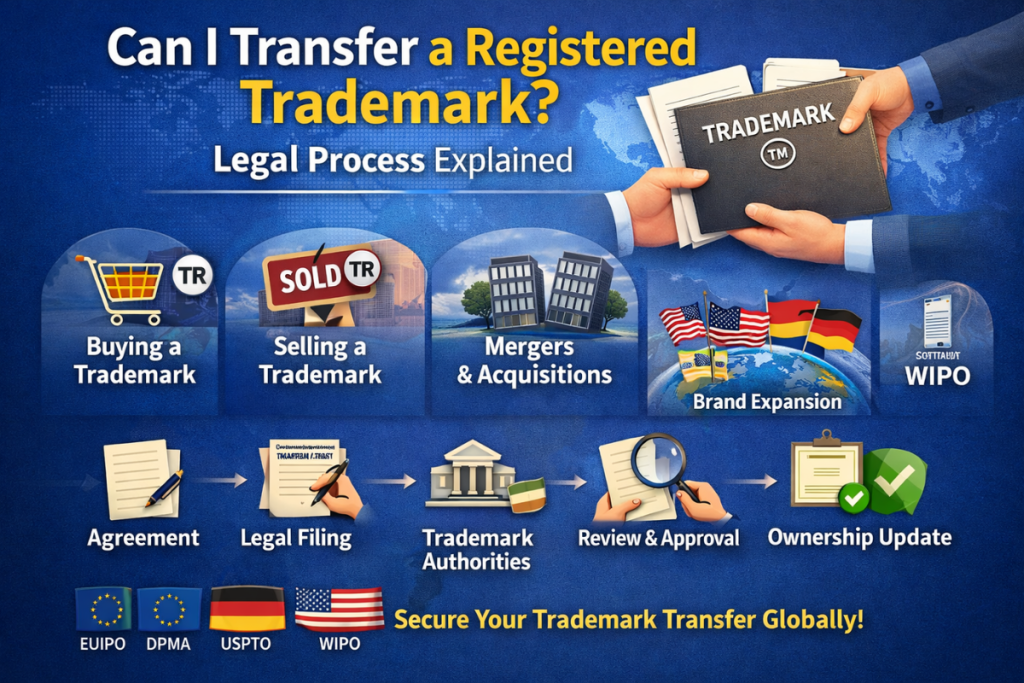
Yes, you can transfer a registered trademark. This legal process—known as trademark transfer or trademark assignment—allows the ownership of a trademark to move from one party to another.
Whether you’re selling a brand, buying an existing trademark, or restructuring your business, understanding how to transfer a registered trademark legally is essential. Without proper transfer, you may not have full rights to use or protect the brand.
What Does It Mean to Transfer a Registered Trademark?
Transferring a registered trademark means changing the legal ownership of a trademark in official records. Once completed, the new owner has full rights to use, license, or sell the trademark.
Key Elements of Trademark Transfer
- Legal ownership changes from seller to buyer
- Requires official documentation
- Must be recorded with trademark authorities
- Applies to names, logos, and slogans
👉 This process is commonly referred to as the trademark assignment process.
Is It Legal to Transfer a Registered Trademark?
Yes, trademark transfer is completely legal and widely practiced worldwide.
However, the process must follow legal requirements set by trademark authorities such as:
- EUIPO (European Union)
- DPMA (Germany)
- USPTO (United States)
- WIPO (International system)
💡 If not done correctly, the transfer may be invalid, leading to legal complications.
When Can You Transfer a Registered Trademark?
There are several common situations where businesses transfer trademarks:
🔹 Buying a Registered Trademark
Many startups and Amazon sellers prefer to buy registered trademarks to skip long registration processes.
🔹 Selling a Trademark
Businesses often sell unused or inactive trademarks as valuable assets.
🔹 Business Mergers or Acquisitions
When companies merge, trademarks must be transferred to the new entity.
🔹 Brand Expansion
Expanding into international markets may require restructuring trademark ownership.
Legal Process to Transfer a Registered Trademark (Step-by-Step)
Here is a clear breakdown of the legal process for trademark transfer:
Step 1: Agreement Between Parties
The buyer and seller agree on:
- Purchase price
- Scope of rights
- Terms and conditions
Step 2: Drafting the Trademark Assignment Agreement
This is the most important legal document. It includes:
- Trademark details (name, registration number)
- Parties involved
- Transfer terms
- Payment conditions
💡 Without this agreement, the transfer is not legally valid.
Step 3: Signing the Agreement
Both parties must sign the agreement to make it legally binding.
Step 4: Filing with Trademark Authorities
The transfer must be recorded with the relevant authority, such as:
- EUIPO (European Union)
- DPMA (Germany)
- USPTO (USA)
- WIPO (international system)
Step 5: Review and Approval
The authority reviews the application and verifies documents.
Step 6: Ownership Update
Once approved, the new owner is officially recorded in the trademark register.
👉 At this stage, the trademark ownership transfer is complete.
Trademark Transfer in Different Countries
🇪🇺 European Union (EUIPO)
- One application covers multiple countries
- Efficient process for international businesses
🇩🇪 Germany (DPMA)
- Strict legal requirements
- Accurate documentation needed
🇺🇸 United States (USPTO)
- Requires detailed assignment records
- Public database updates
🌐 International (WIPO)
- Used for multi-country trademark management
- Ideal for global brands
💡 Each region has its own procedures, so international transfers require careful handling.
Common Legal Mistakes to Avoid
Avoid these errors when transferring a trademark:
- Not registering the transfer officially
- Using incomplete or incorrect documents
- Ignoring similar trademarks or conflicts
- Using the trademark before transfer approval
- Skipping legal advice
👉 These mistakes can result in loss of rights or legal disputes.
Cost of Transferring a Registered Trademark
The cost of trademark transfer depends on several factors:
💸 1. Government Fees
- Filing fees vary by country
💸 2. Legal Fees
- Lawyers or trademark consultants
💸 3. Service Costs
- Platforms or agencies managing the process
💡 Cost vs New Registration
In many cases:
- Buying + transferring a trademark is faster
- More predictable than new registration
- Reduces legal risks
Buying vs Registering a Trademark
| Factor | Buying a Trademark | Registering a Trademark |
| Time | Immediate use | Takes months |
| Risk | Lower | Higher |
| Cost | Medium | Variable |
| Approval | Already approved | Not guaranteed |
👉 For startups, buying and transferring a trademark is often the better option.
Risk Prevention Tips for Trademark Transfer
To protect your business:
- Verify ownership before purchase
- Use a legally valid assignment agreement
- Check global trademark databases
- Ensure proper filing with authorities
- Work with experienced professionals
When Should You Hire a Trademark Expert?
You should consider expert help if:
- You’re dealing with international trademark transfer
- The trademark has high business value
- Legal requirements are complex
- You want fast and secure processing
How Trademark Buy Sale Can Help
Managing trademark transfers globally can be complex—but the right partner makes it simple.
Trademark Buy Sale provides:
- Secure and legal trademark transfer services
- Global marketplace to buy and sell registered trademarks
- Expert support for EU, Germany, and international markets
- Fast and compliant ownership transfer
💡 Trusted by startups, Amazon sellers, and international businesses.
Yes, you can transfer a registered trademark—and it’s a powerful way to buy, sell, or expand a business globally. However, the process must be handled carefully to ensure legal ownership and avoid risks.
By following the correct legal steps and working with experts, you can complete a trademark transfer safely and efficiently.
👉 Protect your brand and ensure your trademark ownership is legally secure.