
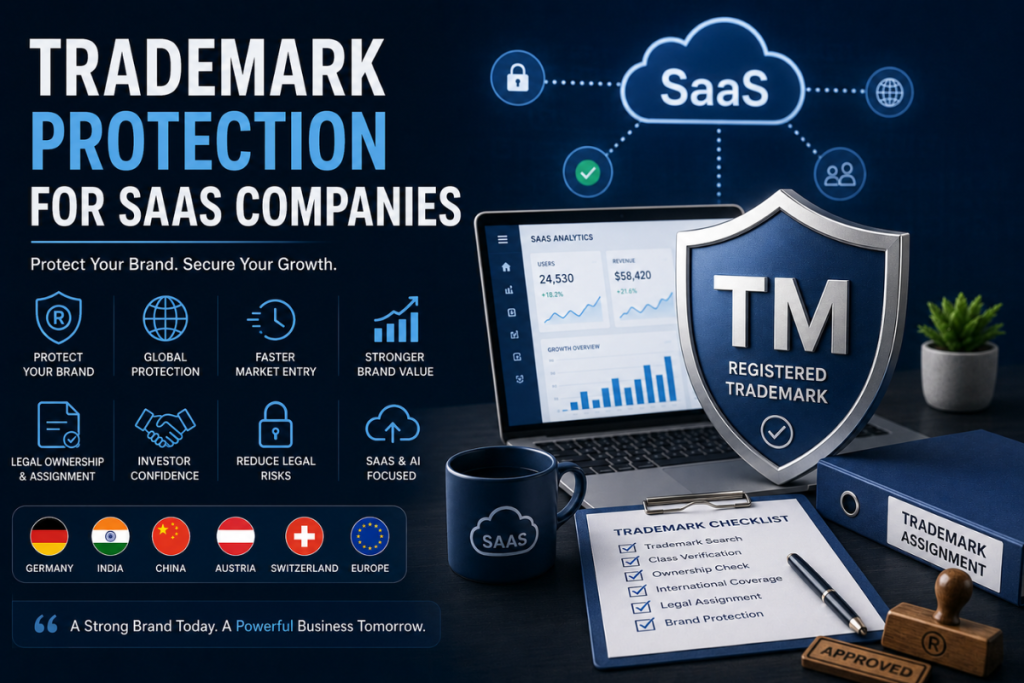
Launching a SaaS company is fast. Protecting the brand behind it is often slow — and that creates risk.
Many SaaS founders invest heavily in product development, AI infrastructure, marketing, and customer acquisition before checking whether their brand name is legally protected. By the time they realize the issue, another company may already own a similar trademark.
For SaaS businesses operating globally, trademark protection is no longer optional. It is a critical part of intellectual property strategy, investor readiness, platform compliance, and long-term brand protection.
In many cases, startups choose to buy a registered trademark instead of waiting months for a new application to be approved. This strategy can accelerate market entry, reduce legal uncertainty, and help SaaS brands scale internationally faster.
At Trademark Buy Sale, Stefan and the team bring 20+ years of experience in trademark consulting, finance, legal processes, and international trademark transfer support across Germany, India, China, Austria, Switzerland, and the EU market.
This guide explains how trademark protection works for SaaS companies, when buying a trademark makes sense, what risks to avoid, and how to secure trademark ownership legally.
Key Takeaways
- SaaS brands are highly vulnerable to naming conflicts.
- Trademark protection helps secure brand ownership globally.
- Buying a registered trademark can save time for fast-growing startups.
- Trademark assignment and transfer must follow legal procedures.
- SaaS companies should verify ownership, classes, and international rights.
- Germany, China, India, Austria, and Switzerland all have different trademark risks.
- According to WIPO, international brand protection is increasingly important for digital businesses.
- Trademark due diligence is essential before acquisitions or transfers.
What Is Trademark Protection for SaaS Companies?
Trademark protection for SaaS companies means legally securing a brand name, logo, product identity, or platform name through trademark registration or trademark acquisition. It helps prevent competitors from using similar names and protects the company’s intellectual property rights in different markets.
SaaS businesses rely heavily on brand recognition. Unlike traditional businesses, software companies scale internationally very quickly. A trademark conflict in one country can suddenly affect app stores, payment providers, marketplaces, or investor deals.
Trademark protection usually covers:
- SaaS platform names
- AI product names
- Software tools
- Logos
- Taglines
- Domain-linked branding
- Mobile applications
- Cloud software services
Why SaaS Companies Face Higher Trademark Risks?
A common trademark mistake is assuming domain ownership equals trademark ownership.
Many SaaS founders buy a .com domain and start marketing immediately. However, another company may already own the registered mark through a national trademark office.
This can lead to:
- Cease-and-desist letters
- Forced rebranding
- Investor concerns
- App store disputes
- Marketplace restrictions
- International expansion problems
In our experience, SaaS companies often discover trademark conflicts only after scaling marketing campaigns.
Why Buying a Registered Trademark Can Be Smart for SaaS Startups?
Buying a registered trademark allows a SaaS company to acquire existing trademark rights legally instead of waiting through long registration timelines. This strategy is especially useful for startups that need fast market entry, Amazon Brand Registry access, or immediate legal protection.
Benefits of Buying a Registered Trademark
Faster Brand Protection:
New trademark applications can take months or even years depending on jurisdiction and objections.
Buying an existing registered trademark can provide:
- Immediate ownership transfer
- Faster onboarding
- Reduced approval delays
- Existing legal history
- Faster expansion opportunities
Stronger Investor Confidence:
Investors increasingly review intellectual property during due diligence.
A legally transferred registered mark demonstrates:
- Brand maturity
- Reduced legal risk
- Ownership clarity
- Better acquisition readiness
Easier International Expansion:
SaaS businesses rarely stay local.
A registered trademark can support expansion into:
- EU markets
- Global SaaS marketplaces
- Mobile app ecosystems
- Enterprise software contracts
Better Platform Compliance:
Platforms increasingly require trademark verification.
This includes:
- Amazon Brand Registry
- App marketplaces
- Advertising systems
- Anti-counterfeit reporting systems
What Is Trademark Assignment?
Trademark assignment is the legal transfer of trademark ownership from one entity to another. It includes ownership verification, assignment agreements, legal documentation, and official recording with the relevant trademark office.
Trademark Assignment vs Trademark Licensing:
| Factor | Trademark Assignment | Trademark Licensing |
| Ownership | Fully transferred | Remains with owner |
| Legal Rights | Buyer receives rights | Temporary permission |
| Duration | Permanent | Limited |
| Trademark Office Filing | Usually required | Sometimes optional |
| SaaS Acquisition Friendly | Yes | Limited |
Important Trademark Assignment Elements:
A legal trademark transfer should include:
- Trademark registration details
- Ownership verification
- Transfer agreement
- Jurisdiction review
- Trademark class confirmation
- International rights assessment
- Filing updates
Many businesses underestimate the importance of checking trademark classes before purchase.
Step-by-Step Trademark Protection Process for SaaS Companies
The best way to protect a SaaS trademark is to combine legal due diligence, international strategy, and proper ownership transfer procedures.
Step 1: Conduct Trademark Search
Before using a brand name:
- Search national databases
- Review EUIPO records
- Check similar marks
- Analyze SaaS competitors
- Verify domain conflicts
Relevant organizations include:
- EUIPO
- USPTO
- WIPO
Step 2: Decide Between Registration or Acquisition
SaaS startups typically choose between:
- Registering a new trademark
- Buying a registered trademark
Buying may be better when:
- Launch speed matters
- Investors are waiting
- Platform verification is urgent
- Existing rights are valuable
Step 3: Perform Due Diligence
Important checks include:
| Due Diligence Checklist | Why It Matters |
| Trademark validity | Prevent invalid acquisitions |
| Ownership history | Avoid disputes |
| Existing objections | Identify risks |
| International coverage | Verify expansion rights |
| Class accuracy | Ensure SaaS coverage |
| Pending litigation | Reduce legal exposure |
Step 4: Draft Trademark Assignment Agreement
This legal agreement defines:
- Buyer and seller
- Payment terms
- Transfer conditions
- Intellectual property rights
- Jurisdiction
- Effective transfer date
Step 5: File Transfer With Trademark Office
Most jurisdictions require official recording.
This updates:
- Trademark ownership
- Public records
- Enforcement authority
Step 6: Update Brand Assets
After transfer:
- Update legal notices
- Modify ownership records
- Secure domains
- Update platform accounts
Common Trademark Problems SaaS Companies Face:
Trademark disputes can disrupt SaaS growth, funding, and customer trust. Most issues happen because startups move too fast without checking legal ownership.
1. Common SaaS Trademark Mistakes
Using Descriptive Names
Generic names are harder to protect.
Example:
- “Cloud Analytics Software”
- “AI CRM Platform”
These may face rejection.
2. Ignoring International Expansion
A name available in Germany may conflict in China.
3. Buying Without Legal Review
A cheap trademark can become expensive later.
Risks include:
- Hidden disputes
- Invalid registration
- Wrong trademark class
- Ownership confusion
4. Delaying Trademark Filing
A competitor may file first.
China especially follows a first-to-file approach.
Country-Specific Trademark Insights:
1. Germany
Germany has a strong trademark enforcement system.
SaaS companies entering the German market should:
- Verify DPMA records
- Check EU overlaps
- Secure German-language branding
Germany is highly important for B2B SaaS expansion.
2. India
India’s startup ecosystem is growing rapidly.
However:
- Trademark opposition is common
- Similar-name conflicts happen frequently
- Processing timelines vary
Indian SaaS founders increasingly buy registered trademarks for faster launch protection.
3. China
China remains one of the highest-risk markets for trademark squatting.
A common trademark mistake is delaying filing before manufacturing or expansion.
Many SaaS and e-commerce brands discover local registrations already exist.
4. Austria
Austria benefits from EU trademark structures through EUIPO coverage.
Still, businesses should:
- Check regional conflicts
- Verify EU-wide enforceability
5. Switzerland
Switzerland is attractive for fintech, AI, and enterprise SaaS companies.
Swiss trademark protection is respected globally and often associated with premium brand positioning.
Buy Trademark vs Register Trademark:
Choosing between buying and registering depends on speed, risk tolerance, and business goals. Buying a trademark is often faster, while registration may offer lower upfront costs for early-stage startups.
| Factor | Buy Trademark | Register Trademark |
| Speed | Fast | Slow |
| Existing Rights | Yes | No |
| Legal History | Existing | New |
| Investor Readiness | Strong | Moderate |
| Cost | Higher upfront | Lower upfront |
| Risk of Rejection | Lower | Higher |
| Marketplace Readiness | Faster | Delayed |
EUIPO vs USPTO for SaaS Businesses:
| Factor | EUIPO | USPTO |
| Coverage | EU countries | United States |
| Filing Language | Multiple | English |
| SaaS Importance | Very high | Extremely high |
| Cost Structure | EU-wide | US-only |
| International SaaS Value | Strong | Strong |
Trademark Risk Analysis Table:
| Risk | Impact | Solution |
| Trademark squatting | High | File early |
| Wrong class registration | High | Legal review |
| Invalid ownership transfer | High | Assignment agreement |
| International conflicts | Medium | Global search |
| Domain mismatch | Medium | Unified brand strategy |
| Similar competitor mark | High | Professional due diligence |
AI SaaS Startup Expansion Scenario
A fictional AI startup called “Neuro Pilot” planned expansion into Germany and India.
The founders:
- Owned the domain
- Had active users
- Started fundraising
But they discovered:
- Similar marks existed
- Their registration could face opposition
- Expansion timelines were delayed
Instead of risking a dispute, they acquired an existing registered trademark through a verified trademark marketplace.
The benefits included:
- Faster legal certainty
- Stronger investor confidence
- Immediate transfer rights
- Easier international onboarding
In our experience, this approach is increasingly common among fast-scaling SaaS companies.
Expert Insights From Trademark Buy Sale:
Many SaaS founders focus heavily on product-market fit but underestimate brand protection.
The reality is simple:
A SaaS product can pivot quickly. A damaged brand reputation is much harder to repair.
According to WIPO, trademarks are among the most valuable business assets for digital-first companies.
Stefan’s 20+ years of experience in international trademark consulting shows that early trademark strategy often reduces long-term legal costs significantly.
Best Practices for SaaS Trademark Protection
- File early
- Protect internationally
- Verify trademark classes
- Secure assignment agreements
- Monitor competitors
- Combine domain and trademark strategy
- Use verified trademark transfer procedures
New Trademark vs Existing Trademark:
| Feature | New Trademark | Existing Trademark |
| Approval Waiting Time | Long | Minimal |
| Legal History | None | Existing |
| Investor Appeal | Moderate | Higher |
| Brand Launch Speed | Slower | Faster |
| Risk of Objection | Higher | Lower |
SaaS Trademark Protection Checklist:
| Checklist Item | Status Importance |
| Trademark search completed | Critical |
| Domain verified | Critical |
| Trademark class reviewed | Critical |
| International conflicts checked | High |
| Assignment agreement prepared | High |
| Ownership verified | Critical |
| Marketplace eligibility reviewed | Medium |
Can a SaaS company buy a registered trademark?
Yes. A SaaS company can legally buy a registered trademark through a trademark assignment process that transfers ownership rights officially.
Is buying a trademark faster than registering one?
Usually yes. Buying an existing registered trademark can provide faster legal protection and market readiness.
What is trademark assignment?
Trademark assignment is the legal transfer of ownership from one party to another through a formal agreement and trademark office filing.
Why do SaaS startups need trademark protection early?
Early protection reduces risks related to rebranding, investor concerns, platform disputes, and international conflicts.
Can trademarks be transferred internationally?
Yes. International trademark transfer is possible, but procedures depend on local trademark office requirements.
What is trademark squatting?
Trademark squatting happens when someone registers a brand name before the legitimate business owner does.
Which trademark classes are important for SaaS?
Software and technology services often involve Class 9 and Class 42, depending on the business model.
Is EUIPO useful for SaaS companies?
Yes. EUIPO protection helps SaaS companies secure trademark rights across multiple EU countries efficiently.
Protect Your SaaS Brand Before Someone Else Claims It
Your SaaS brand is more than a logo. It is a business asset tied to customer trust, investor confidence, and long-term growth.
Whether you want to:
- Buy a registered trademark
- Transfer trademark ownership
- Expand internationally
- Protect an AI or SaaS platform
- Verify a trademark acquisition
Trademark Buy Sale can help.
With 20+ years of international trademark consulting experience, Stefan and the team support startups, SaaS companies, Amazon sellers, and global businesses across Germany, India, China, Austria, and Switzerland.
Ready to secure your trademark?
- Request a consultation
- Submit a trademark inquiry
- Discuss secure trademark transfer options
- Explore verified trademark marketplace opportunities