
AI startups move fast.
A new product launches today, gains traction tomorrow, and suddenly competitors, copycats, or trademark conflicts appear from nowhere. Many founders focus heavily on product development, funding, and growth but delay trademark protection until it becomes a legal problem.
That delay can become expensive.
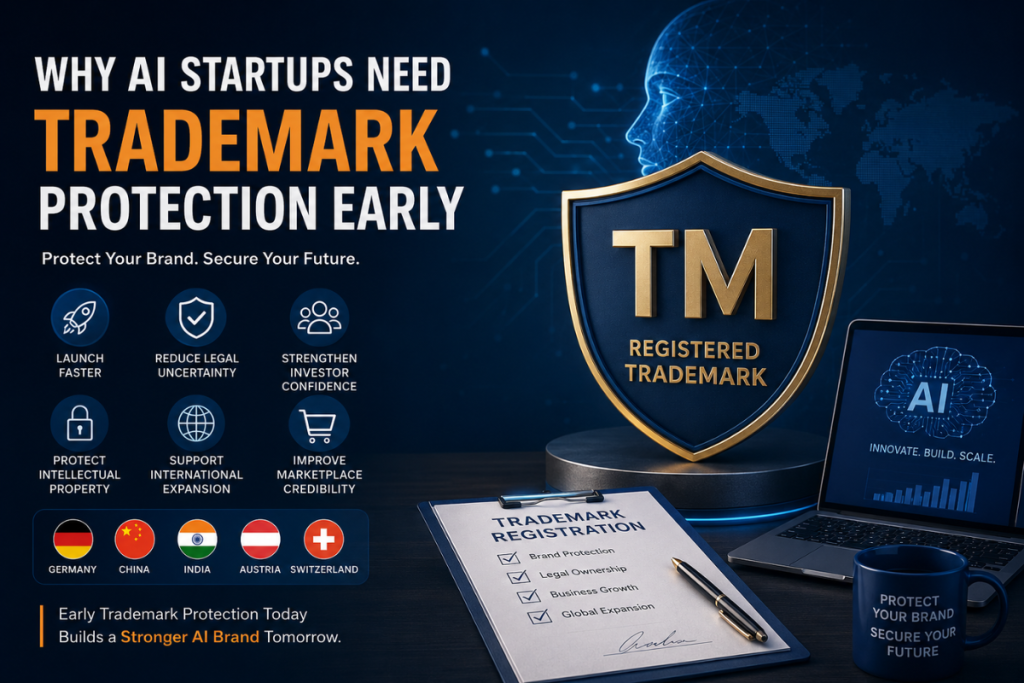
In competitive markets like Germany, China, India, Austria, and Switzerland, brand protection is now a critical business asset for AI companies. A startup may spend months building recognition only to discover that another company already owns a similar registered trademark.
This is one reason many founders now choose to buy a registered trademark instead of waiting through long trademark registration timelines.
A registered trademark can help AI startups:
- Launch faster
- Reduce legal uncertainty
- Strengthen investor confidence
- Protect intellectual property
- Support international expansion
- Improve marketplace credibility
According to World Intellectual Property Organization, intellectual property protection plays a major role in innovation-driven industries. For AI businesses, trademark ownership is often one of the earliest forms of defensible brand protection.
In this guide, we explain why early trademark protection matters for AI startups, how trademark acquisition works, common risks founders overlook, and why buying an existing trademark may offer a strategic advantage.
Key Takeaways
- AI startups face increasing trademark conflicts globally
- Buying a registered trademark can accelerate market entry
- Trademark protection supports fundraising and investor trust
- China’s first-to-file system creates higher risks for AI brands
- Trademark assignment and legal transfer require due diligence
- Early brand protection helps avoid costly rebranding
- International trademark strategy matters for scaling AI companies
- Verified trademark marketplaces reduce acquisition risk
What Is Trademark Protection for AI Startups?
Trademark protection gives AI startups legal rights over their brand identity, including names, logos, slogans, and digital product branding. A registered trademark helps prevent competitors from using similar marks and supports long-term intellectual property protection.
AI companies often rely heavily on brand trust. Whether the startup offers AI automation, SaaS tools, machine learning platforms, or generative AI services, the company name quickly becomes part of its commercial value.
Trademark protection may include:
- Registered brand names
- Product trademarks
- AI platform branding
- SaaS product identity
- App naming rights
- International trademark rights
Many startups underestimate how quickly trademark conflicts appear once a product gains visibility.
In our experience, AI founders often secure domains and social handles first while ignoring trademark databases. That creates serious legal exposure later.
Why AI Startups Are Especially Vulnerable
AI is one of the fastest-growing business sectors globally.
As thousands of AI startups launch each year, trademark availability decreases rapidly. Similar naming patterns, generic AI-related wording, and overlapping technologies increase the risk of disputes.
A common trademark mistake is choosing descriptive names like:
- SmartAI
- VisionGPT
- NeuralFlow
- AutoMind
These names may appear unique internally but can create legal conflicts during trademark examination.
According to trademark office practices used by European Union Intellectual Property Office and United States Patent and Trademark Office, weakly distinctive names often face objections or opposition.
Why Early Trademark Protection Matters
Early trademark protection helps AI startups secure branding rights before scaling internationally. It reduces rebranding risks, strengthens investor confidence, supports licensing opportunities, and protects long-term business value.
Timing matters.
Founders usually prioritize trademarks only after:
- Launching products
- Spending on advertising
- Hiring teams
- Raising capital
- Building customer recognition
At that stage, changing the brand can become financially painful.
Major Benefits of Early Trademark Protection:
1. Faster International Expansion
AI companies often scale globally from day one.
A startup operating in Germany may quickly enter India, China, or the EU market. Without trademark protection, expansion becomes legally risky.
2. Better Investor Confidence
Investors frequently review intellectual property during due diligence.
A protected brand signals:
- Business maturity
- Lower legal exposure
- Stronger commercial positioning
- Scalable market identity
3. Reduced Rebranding Costs
Rebranding affects:
- Websites
- Domains
- Product interfaces
- Advertising campaigns
- App listings
- Legal documentation
For AI startups, rebranding can also impact SEO authority and user trust.
4. Stronger Competitive Protection
Trademark ownership helps businesses:
- Stop imitation
- Prevent marketplace confusion
- Protect SaaS branding
- Secure licensing rights
What Is the Best Way for AI Startups to Secure a Trademark?
The best way for AI startups to secure a trademark is to either file a strong trademark application early or buy a registered trademark through legal trademark assignment procedures. The ideal strategy depends on launch timelines, market urgency, and brand availability.
Option 1 — Register a New Trademark
This approach works well if:
- The brand is highly unique
- No urgency exists
- International expansion is limited initially
However, trademark registration may take months or longer depending on jurisdiction.
Option 2 — Buy a Registered Trademark
Many startups now buy a registered trademark to accelerate commercial readiness.
Benefits include:
- Existing trademark approval
- Faster launch timelines
- Lower rejection uncertainty
- Marketplace readiness
- Immediate brand protection
This strategy is especially useful for AI startups preparing:
- Product launches
- Investor pitches
- International scaling
- Marketplace onboarding
Buy Trademark vs Register Trademark:
| Feature | Buy Registered Trademark | Register New Trademark |
| Speed | Faster | Slower |
| Legal Approval | Already approved | Pending examination |
| Rebranding Risk | Lower | Higher if rejected |
| Investor Readiness | Stronger | Moderate |
| Marketplace Access | Faster | Delayed |
| International Expansion | Easier | Slower |
| Trademark Transfer Required | Yes | No |
| Examination Risk | Lower | Higher |
How Trademark Acquisition Works Step-by-Step:
Trademark acquisition involves legal due diligence, ownership verification, assignment agreements, and official transfer filing. A structured process helps AI startups buy trademarks safely while reducing intellectual property risks.
Step 1 — Identify Business Goals
Before buying a trademark, founders should evaluate:
- Target countries
- Expansion plans
- Product categories
- SaaS classifications
- Funding timelines
Step 2 — Review Trademark Marketplace Listings
Businesses should review:
- Registration status
- Trademark classes
- Jurisdiction coverage
- Commercial usability
- Existing disputes
Step 3 — Conduct Due Diligence
This is one of the most important stages.
Important Checks:
| Due Diligence Area | Why It Matters |
| Ownership verification | Prevent fraud |
| Trademark validity | Confirm active rights |
| Licensing conflicts | Avoid disputes |
| Similar marks | Reduce litigation risk |
| Trademark classes | Ensure industry fit |
| International coverage | Support expansion |
Many businesses underestimate the importance of reviewing historical ownership records before acquisition.
Step 4 — Trademark Assignment Agreement
A trademark assignment is the legal transfer of trademark ownership from one party to another. The process usually includes ownership verification, assignment agreements, and official filing with the relevant trademark office.
The agreement may include:
- Transfer rights
- Payment terms
- Jurisdiction scope
- Licensing conditions
- Legal warranties
Step 5 — Official Filing
Transfer filings may involve:
- National trademark offices
- EUIPO procedures
- WIPO international systems
- USPTO documentation
Step 6 — Ownership Confirmation
Once approved, the startup becomes the official trademark owner.
Common Trademark Mistakes AI Startups Make:
AI startups often delay trademark protection, choose weak brand names, skip due diligence, or expand internationally without verifying trademark availability. These mistakes can create major legal and financial risks later.
Most Common Problems:
1. Using Generic AI Names
Overused naming patterns reduce distinctiveness.
Examples include:
- AI Hub
- Deep Vision AI
- Smart Neural Tech
These names are harder to protect legally.
2. Expanding Into China Too Late
China operates under a first-to-file trademark system.
That means another business may legally register your brand first.
Ignoring International Classes:
AI businesses often overlap across:
- Software
- SaaS
- Cloud services
- Education
- Analytics
- Robotics
Choosing incorrect classes weakens protection.
Buying Trademarks Without Legal Review:
This creates risks such as:
- Ownership disputes
- Invalid transfers
- Hidden licensing agreements
- Commercial restrictions
Trademark Risk Analysis Table:
| Risk | Impact | Prevention Strategy |
| Trademark conflict | Rebranding costs | Conduct searches early |
| Weak trademark name | Rejection risk | Use distinctive branding |
| Fraudulent seller | Financial loss | Verify ownership |
| China trademark squatting | Loss of market access | Register or acquire early |
| Incorrect trademark classes | Weak protection | Professional review |
| Improper assignment filing | Transfer rejection | Legal support |
Country-Specific Trademark Insights:
1. Germany
Germany has a highly structured trademark system with strong enforcement mechanisms. AI startups entering the EU market often use German trademark strategy as a foundation for broader European expansion.
German businesses frequently prioritize:
- SaaS branding
- Industrial AI solutions
- B2B automation tools
- Technology licensing
2. India
India’s startup ecosystem is growing rapidly, increasing trademark competition in software and AI sectors.
Benefits of early protection include:
- Reduced infringement risk
- Stronger marketplace trust
- Better investor perception
- Protection for app-based businesses
3. China
China presents one of the biggest trademark risks for AI startups because of its first-to-file system.
According to WIPO-related international trademark practices, early registration is critical for businesses manufacturing or selling products in China.
Common China Risks:
- Trademark squatting
- Counterfeit marketplaces
- Unauthorized distributors
- Manufacturing conflicts
4. Austria & Switzerland
Austria and Switzerland are attractive markets for premium AI brands, fintech startups, and enterprise software providers.
Businesses often focus on:
- High-value branding
- International licensing
- European trademark coordination
- Long-term intellectual property strategy
EUIPO vs USPTO Comparison:
| Feature | EUIPO | USPTO |
| Coverage | European Union | United States |
| Filing Scope | Multi-country EU protection | US protection only |
| Examination Style | EU-based review | US-based review |
| Opposition Process | Yes | Yes |
| AI Startup Relevance | Strong for EU expansion | Strong for US market |
| Trademark Transfer Support | Available | Available |
Realistic AI Startup Case Study
An AI automation startup planned to launch a multilingual productivity platform across Europe and Asia within six months.
The founders initially filed a new trademark application. During examination, they discovered a similar registered mark already existed in overlapping software classes.
Instead of waiting through objections and possible rejection, the company acquired a registered trademark through a verified trademark marketplace.
Results:
- Faster launch timeline
- Reduced legal uncertainty
- Investor confidence improved
- SaaS onboarding accelerated
- International expansion supported
In our experience, this situation is becoming increasingly common for AI startups operating globally.
Expert Insights From Trademark Buy Sale
Many AI Founders Prioritize Speed Over Protection:
That creates long-term risk.
A strong trademark strategy should begin before large-scale advertising, marketplace expansion, or investor outreach.
Trademark Protection Is Now a Competitive Asset:
For AI businesses, branding is no longer just marketing.
It supports:
- Valuation
- Licensing
- Trust
- Acquisition potential
- Market differentiation
Buying a Trademark Can Reduce Operational Delays:
When time-sensitive launches matter, acquiring an existing trademark may offer strategic advantages compared to waiting for registration approval.
Best Practices for AI Startup Trademark Strategy
Recommended Checklist:
| Best Practice | Importance |
| Conduct trademark search early | Prevent conflicts |
| Use distinctive naming | Improve protection |
| Review international markets | Support scaling |
| Verify trademark classes | Stronger legal coverage |
| Conduct due diligence | Reduce acquisition risk |
| Use legal assignment agreements | Secure ownership transfer |
| Monitor competitor filings | Protect brand identity |
Can AI startups buy a registered trademark legally?
Yes. AI startups can legally buy registered trademarks through trademark assignment agreements and official trademark office transfer procedures.
Why should AI startups protect trademarks early?
Early protection reduces rebranding risks, strengthens intellectual property rights, and supports international expansion.
Is buying a trademark faster than registering one?
In many cases, yes. Buying a registered trademark may reduce waiting time because the mark has already completed registration procedures.
What is trademark assignment?
Trademark assignment is the legal transfer of trademark ownership from one party to another.
Why is China risky for AI startups without trademarks?
China uses a first-to-file system, meaning another business can register your brand before you do.
Do investors care about trademarks?
Yes. Investors often review intellectual property protection during startup due diligence.
Can SaaS companies buy trademarks internationally?
Yes. International trademark transfers are possible depending on jurisdiction rules and filing procedures.
What should startups check before buying a trademark?
Businesses should verify:
- Ownership status
- Trademark validity
- Trademark classes
- Existing disputes
- Licensing agreements
Protect Your AI Brand Before Someone Else Does
AI startups move quickly, but trademark conflicts move faster.
Trademark Buy Sale helps startups:
- Buy registered trademarks
- Complete legal trademark transfer
- Reduce launch delays
- Secure international brand protection
- Verify trademark ownership safely
With 20+ years of experience in international trademark consulting, Stefan and the Trademark Buy Sale team support businesses across Germany, India, China, Austria, and Switzerland.
Ready to secure your brand?
- Request a trademark consultation
- Ask about verified trademark opportunities
- Start your trademark acquisition process
- Contact our team on WhatsApp today