
GmbH Company Formation in Germany | Register Your Private Limited Company
The GmbH is Germany’s most trusted business structure — recognized by banks, investors, and partners across the EU. If you’re building a company for the long term, this is usually the strongest foundation to start from.
✔ Limited liability protection from day one
✔ The most trusted structure with German banks and investors
✔ Full support from entity setup to notary registration

What Is a GmbH?
A GmbH (Gesellschaft mit beschränkter Haftung) is Germany's standard private limited company structure, offering limited liability protection to its owners while being widely recognized as a stable, credible business entity across Germany and the EU. It's the default choice for international SMEs, established businesses, and any founder planning serious, long-term operations in Germany. Unlike a sole proprietorship, a GmbH separates your personal assets from business liability — meaning your personal finances are protected if the company faces debts or legal claims.
Why Choose a GmbH?
| Feature | Detail |
|---|---|
| Liability | Limited to company assets — personal assets protected |
| Capital requirement | €25,000 (typically €12,500 deposited at formation) |
| Reputation | Highest trust level among German banks, suppliers, investors |
| Best for | International SMEs, manufacturers, service businesses, established startups |
| Growth potential | Well-suited for long-term scaling and EU expansion |
The €25,000 share capital isn’t a fee — it remains the company’s own money and can be used for business operations once the company is formed.
Who Should Choose a GmbH?
- International SMEs entering the German market with a serious, long-term plan
- Manufacturing and service businesses needing strong credibility with partners
- Foreign subsidiaries of an existing international company
- Investment-backed businesses where investors expect a recognized, stable structure
- Amazon sellers and e-commerce businesses planning long-term operations rather than a minimal entry
Our GmbH Formation Process:
- Initial consultation — we review your business goals, ownership structure, and whether a GmbH fits your situation
- Company name check — we verify your desired name is available with the trade register, and can coordinate trademark protection alongside it
- Document preparation — articles of association, shareholder agreements, and formation documents are prepared
- Share capital deposit — the required capital (minimum €12,500 of the €25,000 total) is deposited into a company account
- Notarization — the company's articles of association are formally notarized
- Commercial register (Handelsregister) filing — the GmbH is registered, making it a legally recognized entity
- Post-formation setup — support with tax registration, business bank account, and VAT registration as needed

GmbH Formation for International Founders:
We support GmbH formation for founders and companies from multiple countries entering Germany:
- 🇮🇳 From India
- 🇺🇸 From USA
- 🇬🇧 From UK
- 🇨🇳 From China
Still Deciding Between GmbH and UG?
If you’re not yet sure a GmbH is the right fit, see our full comparison: GmbH vs UG: Which Structure Is Best for Foreign Investors
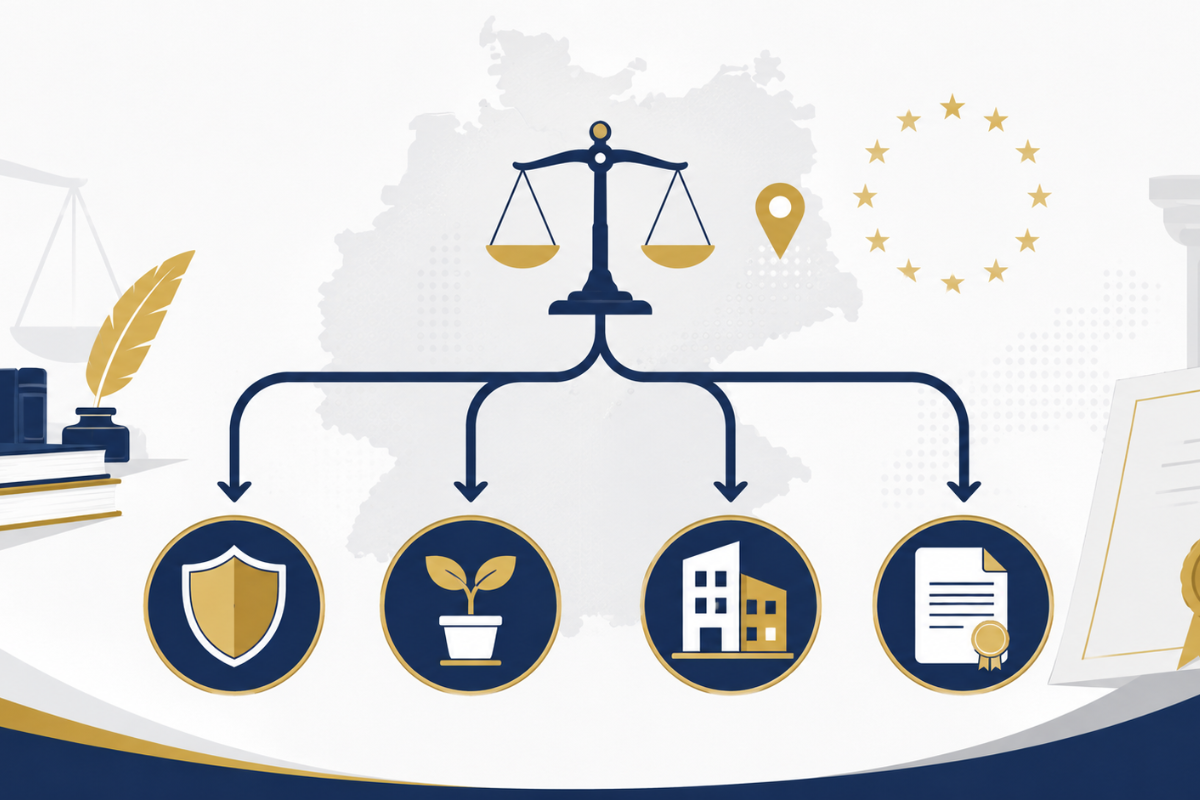
What's Included in Our GmbH Formation Service:
- Company name availability check (and trademark coordination if needed)
- Preparation of articles of association and formation documents
- Guidance on share capital deposit
- Coordination with a German notary
- Commercial register (Handelsregister) filing support
- Post-formation guidance: bank account, tax ID, VAT registration
About Our Expertise:
This service is led by Stefan Geisler, a Germany-based trademark and business advisor experienced in guiding international founders through GmbH formation, from entity structuring to notary registration and trademark protection.
Frequently Asked Questions
How much capital do I need to form a GmbH?
A GmbH requires €25,000 in total share capital, though typically only €12,500 needs to be deposited at the time of formation.
How long does GmbH formation take?
This depends on document preparation and notary scheduling; see our Company Formation Timeline guide → for typical durations.
Can a foreigner be the sole owner of a GmbH?
Yes. There’s no requirement for German or EU citizenship or residency to own or manage a GmbH.
Is the €25,000 capital a one-time fee?
No — it’s not a fee. It becomes the company’s own capital and can be used for legitimate business expenses once the GmbH is formed.
Do I need to be in Germany in person to form a GmbH?
Notarization traditionally requires specific procedures, though remote and digital options exist depending on your situation — we advise on the best approach for your case.
What's the difference between a GmbH and a UG?
A GmbH requires more starting capital but carries stronger credibility with banks and investors; a UG requires far less capital but must retain profits until it can convert into a GmbH. See our full comparison →.
Does forming a GmbH protect my company name as a trademark?
No — company registration and trademark protection are separate legal processes. See our Company Formation with Trademark Service → to cover both.