
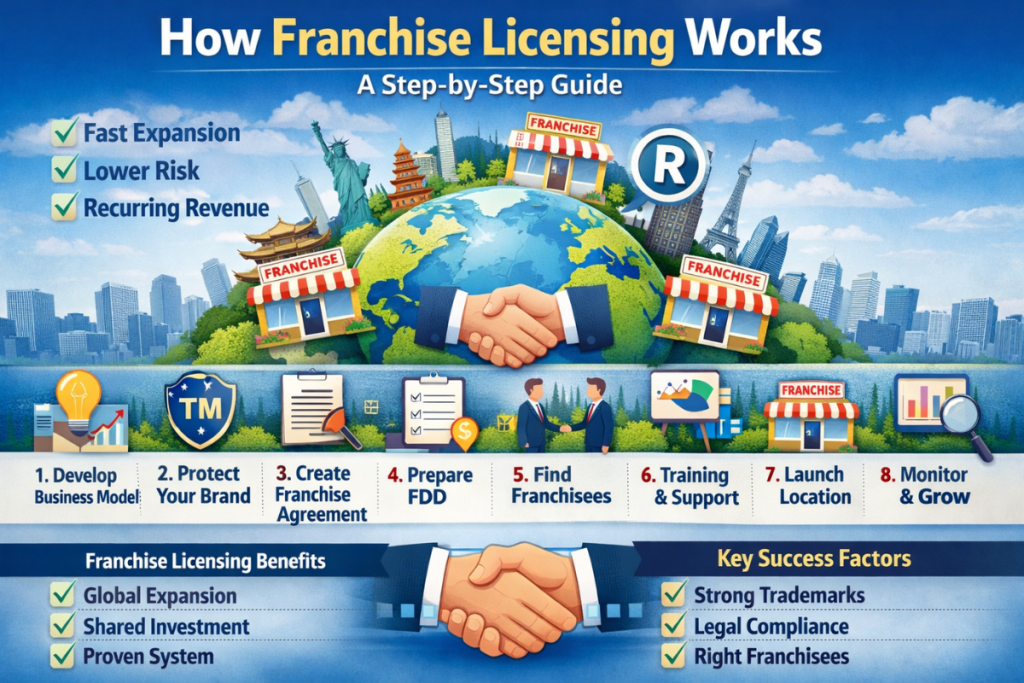
Franchise licensing works by allowing a business owner (franchisor) to grant another party (franchisee) the right to operate a business using its brand, trademark, and proven systems in exchange for fees and ongoing royalties.
This model is widely used by global brands to expand quickly into new markets without taking on all operational risks. In this guide, you’ll learn exactly how franchise licensing works step by step, including legal requirements, costs, and best practices for international business growth.
What Is Franchise Licensing?
Franchise licensing is a structured business agreement where:
- The franchisor owns the brand and system
- The franchisee operates the business under that brand
What’s Included in a Franchise License
- Trademark and brand usage
- Business model and processes
- Marketing systems
- Training and support
👉 This makes it one of the fastest ways to scale a business globally.
Why Businesses Use Franchise Licensing
✅ Fast Expansion Without High Investment
Franchisees invest their own capital, allowing rapid growth.
✅ Lower Risk Compared to Opening New Branches
The franchisor avoids operational costs.
✅ Recurring Revenue Model
Income comes from:
- Initial franchise fees
- Ongoing royalties
✅ Global Market Entry
Franchise licensing helps brands expand into markets like the EU, USA, and Asia efficiently.
How Franchise Licensing Works (Step-by-Step Guide)
Step 1: Develop a Proven Business Model
Before offering franchises, your business must be:
- Profitable
- Repeatable
- Scalable
👉 You need clear systems for operations, marketing, and customer service.
Step 2: Protect Your Trademark and Brand
A strong brand is the foundation of franchise licensing.
- Register your trademark
- Secure legal ownership
- Ensure international protection
👉 Platforms like Trademark Buy Sale help businesses secure and acquire trademarks globally.
Step 3: Create a Franchise Agreement
This is the core legal document that defines the relationship.
It Includes:
- Rights granted to the franchisee
- Territory limitations
- Fees and royalty structure
- Duration of agreement
- Operational guidelines
Step 4: Prepare Franchise Disclosure Documents (FDD)
In many countries, especially the USA, you must provide:
- Business background
- Financial performance
- Legal obligations
👉 This ensures transparency for potential franchisees.
Step 5: Find and Select Franchisees
Choose partners carefully based on:
- Financial capability
- Business experience
- Commitment to your brand
👉 The right franchisees are key to long-term success.
Step 6: Provide Training and Support
Franchisors must offer:
- Initial training programs
- Marketing guidance
- Operational support
👉 This ensures consistency across all locations.
Step 7: Launch the Franchise Location
Once everything is ready:
- The franchisee opens the business
- Operates under your brand
- Follows your system
Step 8: Ongoing Monitoring and Growth
Franchisors:
- Monitor performance
- Maintain quality standards
- Provide continuous support
👉 This keeps the brand strong and consistent globally.
How Franchise Licensing Works Internationally
Expanding globally adds complexity but also huge opportunities.
Benefits:
- Access to new markets
- Local expertise from franchisees
- Faster global brand recognition
Challenges:
- Different legal systems
- Cultural differences
- Trademark protection issues
👉 Proper legal structure and trademark security are essential.
Common Mistakes in Franchise Licensing
Avoid these common errors:
- Not protecting your trademark internationally
- Weak or unclear franchise agreements
- Choosing unqualified franchisees
- Lack of training and support
- Ignoring local laws in international markets
Cost of Franchise Licensing
💸 For Franchisees:
- Initial franchise fee
- Setup costs
- Equipment and inventory
- Ongoing royalties
💸 For Franchisors:
- Legal documentation
- Trademark protection
- System development
- Training programs
👉 Despite initial costs, franchise licensing offers strong long-term returns.
Franchise Licensing vs Starting a Business from Scratch
| Factor | Franchise Licensing | New Business |
| Risk | Lower | Higher |
| Time | Faster | Slower |
| Support | Provided | None |
| Brand Value | Established | New |
👉 This is why many entrepreneurs prefer franchising.
Best Practices for Successful Franchise Licensing
To build a successful franchise system:
- Secure your trademark globally
- Develop a strong and clear business system
- Use legally sound agreements
- Choose the right partners
- Maintain brand consistency
- Provide ongoing support
When to Hire a Professional
You should seek expert help when:
- Expanding internationally
- Handling legal agreements
- Managing trademark protection
- Scaling your franchise network
How Trademark Buy Sale Supports Franchise Growth
A strong trademark is essential for franchise success.
Trademark Buy Sale helps with:
- Buying and securing registered trademarks
- Trademark transfer and legal services
- Global trademark protection
- Supporting international brand expansion
💡 Ideal for businesses planning to grow through franchising.
Franchise licensing is one of the most effective ways to scale a business globally. By following a structured step-by-step process, businesses can expand quickly, reduce risk, and build a strong international presence.
However, success depends on:
- Strong legal foundations
- Trademark protection
- The right franchise partners
👉 If done correctly, franchise licensing can transform your business into a global brand.