
Owning a Trademark and Finding a Buyer Are Two Different Problems
Once you’ve decided to sell a registered trademark in India and worked out roughly what it’s worth, the next question is usually the hardest one: where do you actually find trademark buyers willing to pay for it?
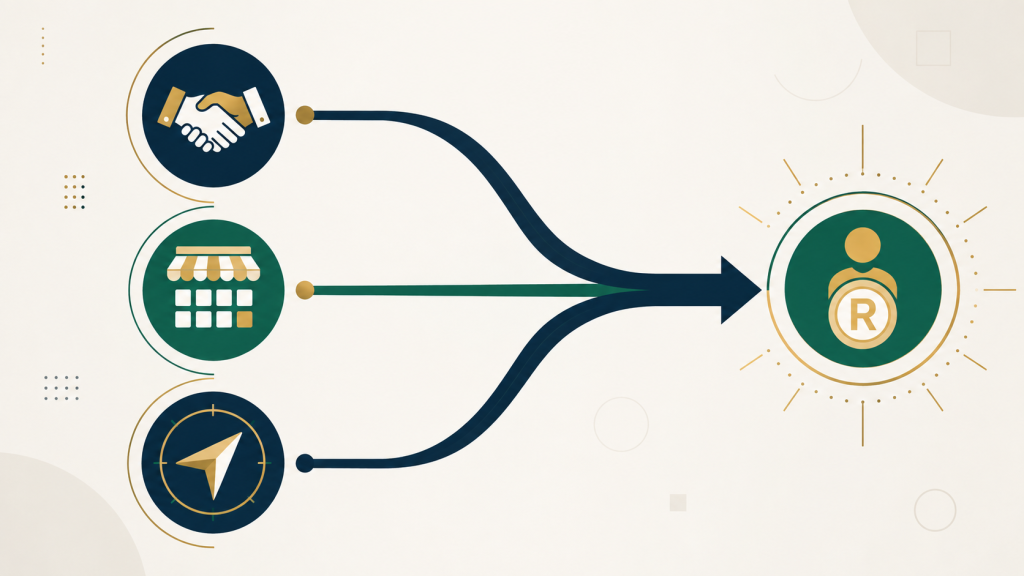
Most sellers have three realistic routes to find a buyer for a trademark in India — working with a trademark broker, listing on a trademark marketplace, or approaching potential buyers directly. Each works differently, and each has real trade-offs. This guide compares them, then walks through the actual process of identifying and reaching Indian trademark buyers.
The Three Routes at a Glance
| Route | How It Works | Typical Speed | Effort Required | Buyer Pool |
|---|---|---|---|---|
| Trademark broker | An intermediary sources buyers on your behalf, usually for a commission | Moderate — depends on broker’s network | Low for you, high reliance on broker | Limited to broker’s contacts |
| Trademark marketplace | You list your trademark where interested buyers can discover it | Often faster, depending on demand | Moderate — you prepare the listing | Wider, ongoing exposure |
| Direct buyer search | You personally identify and approach potential buyers | Slowest, most unpredictable | High — outreach, negotiation, vetting all on you | Narrow, whoever you can find |
None of these is universally “best” — the right choice depends on how much time you have, how distinctive your trademark is, and how comfortable you are handling buyer outreach and negotiation yourself.
Route 1: Selling Through a Trademark Broker
A trademark broker in India acts as an intermediary — someone with an existing network of contacts who sources potential buyers for your trademark, typically in exchange for a commission on the sale.
Where this works well: if you have no time to manage the process yourself and are comfortable paying a broker fee for someone else to handle outreach and negotiation.
Where it falls short: your buyer pool is limited to whoever the broker already knows or can reach, which may not include the buyer who’d actually pay the most for your specific trademark. Broker relationships also vary widely in quality, and there’s often limited transparency into how actively your trademark is being promoted.
If you’re comparing a trademark broker in India with a marketplace, the biggest difference is how your trademark actually reaches potential buyers — through a fixed network of contacts, versus an open listing that ongoing buyer traffic can discover.
Route 2: Listing on a Trademark Marketplace
A trademark marketplace is a platform where trademark owners list their marks for buyers who are actively looking to purchase one — rather than waiting for a broker to find someone, or trying to locate a buyer yourself.
Where this works well: a marketplace can provide broader exposure to potential buyers than relying on a single broker’s contact list or reaching out to businesses one at a time. Because listings stay visible to an ongoing stream of visitors rather than a fixed group, it also tends to give sellers a more realistic read on actual buyer interest.
Where it falls short: you generally need to prepare a proper listing — accurate registration details, a realistic price, and a description that helps a buyer quickly understand the fit for their business. A poorly prepared listing won’t perform as well, regardless of the platform.
Browse how trademarks are listed on our India marketplace
Route 3: Finding a Direct Buyer Yourself
Some sellers try to identify and approach potential buyers directly — reaching out to businesses in a relevant industry, posting in relevant forums or groups, or relying on personal and professional networks.
Where this works well: if you already have a strong sense of exactly who would want your specific trademark — a competitor in the same niche, or a business you know is actively rebranding — a direct approach can occasionally move faster than any intermediary.
Where it falls short: for most sellers, this is the slowest and least reliable route. It requires you to do the outreach, handle rejection, negotiate without market context on what similar trademarks have sold for, and manage much of the legal transfer process largely on your own.
Who Might Buy a Trademark in India?
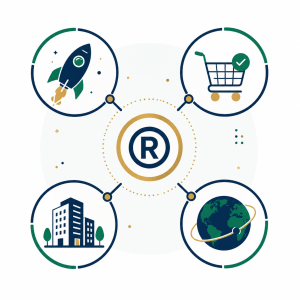
Understanding who’s actually in the market helps you target your search, regardless of which route you choose. Trademark buyers in India commonly include:
- Startups launching a new brand who want a distinctive, already-registered name
- Existing companies expanding their product lines into a new category
- E-commerce businesses building out a brand portfolio
- Amazon sellers who need a registered trademark to support marketplace brand protection
- International companies entering the Indian market who want a locally recognizable name
- Businesses looking for an established brand name rather than starting from zero
- Companies rebranding, who need to replace or retire an existing trademark
Knowing which of these best matches your trademark’s category and class helps you write a listing — or make a direct approach — that speaks to the right kind of buyer.
How to Find Potential Buyers for Your Trademark in India
- Identify businesses that match your trademark’s category — who would realistically want a name in this class?
- Research companies entering your trademark’s category — new market entrants often need a brand name quickly
- Look for businesses expanding into India — international companies entering the market are a common source of trademark buyers
- List the trademark on a dedicated marketplace — for ongoing exposure rather than one-off outreach
- Contact relevant businesses directly, if you have specific candidates in mind
- Screen interested parties before sharing sensitive details — confirm genuine buying intent before disclosing full registration information
- Negotiate based on your valuation and observed buyer demand, not just your original asking price
Comparing the Three Routes on What Actually Matters
Speed to sale. A marketplace listing stays visible to an ongoing stream of visitors, which can move faster than waiting on a broker’s existing network or building direct-outreach momentum from zero.
Buyer pool size. A marketplace exposes your listing to an ongoing stream of buyers, not a fixed list. A broker’s pool is only as large as their existing contacts. A direct search is limited to whoever you personally identify.
Cost structure. Brokers typically charge a commission on the final sale price. Marketplaces may charge a listing fee, a success fee, or both, depending on the platform. Direct outreach has no intermediary fee, but the time cost is significant.
Pricing confidence. A marketplace, by exposing your trademark to multiple potential buyers, can give you a more realistic read on actual demand and help you avoid the common mistake of pricing based on registration cost rather than current market value. Brokers and direct searches typically offer less pricing feedback, since you’re often negotiating with one interested party at a time.
Legal transfer support. Regardless of how you find a buyer, the ownership transfer should be properly documented through the applicable trademark assignment process and recorded with the Indian Trademark Registry as required. A marketplace built specifically around trademark transactions typically helps coordinate this as part of the process — a purely peer-to-peer direct sale leaves more of this on you.
Which Route Fits Your Situation?
- You want broad, ongoing exposure to buyers already searching to buy → a trademark marketplace is generally a strong starting point
- You have no time at all and are comfortable paying a commission for someone else to fully manage outreach → a broker may suit you, provided you vet their track record first
- You already know exactly who wants your trademark → a direct approach can work, but you’ll still want a realistic valuation and proper legal transfer support before finalizing anything
For sellers without a specific buyer already in mind, a marketplace often offers a strong combination of reach and pricing confidence, without the commission structure or limited network of a broker.
Common Mistakes When Trying to Find a Buyer
Only approaching one potential buyer at a time. This puts you in a weak negotiating position — a single interested party has little incentive to offer a competitive price when they know you have no other options.
Skipping valuation before reaching out. Approaching buyers without a realistic sense of your trademark’s worth means negotiating blind — you risk underselling a valuable mark or scaring off buyers with an unrealistic ask.
Assuming marketplace listing alone guarantees a sale. Exposure helps, but a poorly prepared listing — vague description, missing registration details, unrealistic price — won’t convert interest into an actual offer.
Neglecting the legal transfer step. Finding a buyer and agreeing on a price is only half the transaction — the assignment documentation still needs to be completed correctly.
How to Prepare Before You Start Looking for a Buyer
- Get a realistic valuation — understand what actually drives your trademark’s value before you set an asking price
- Gather your documentation — registration certificate, number, class, status, and renewal history
- Choose your route — marketplace, broker, or direct outreach, based on your timeline and comfort with managing the process
- Prepare a clear listing or pitch — a vague description won’t help a buyer quickly see the fit
- Plan for the legal transfer — know in advance how the trademark assignment will be handled once a buyer is found
List Your Trademark on Our India Marketplace
Frequently Asked Questions
Is a trademark marketplace better than a broker?
It depends on your priorities. A marketplace generally offers broader, ongoing exposure with fewer intermediary fees, while a broker suits sellers who want someone else to fully manage outreach in exchange for a commission.
Where can I sell my trademark in India?
You can approach potential buyers directly, work with a trademark broker, or list your trademark on a dedicated trademark marketplace where buyers can discover available marks.
How can I find buyers for an unused trademark in India?
Start by identifying businesses that could commercially use the trademark, researching potential buyers in the relevant category, and listing the mark on a marketplace to increase exposure.
Can I sell my trademark without using a broker?
Yes. Many sellers list directly on a trademark marketplace or find a buyer independently, without ever using a broker.
Do I need a lawyer to sell my trademark to a buyer I found myself?
While not always legally mandatory, proper documentation and a correctly completed trademark assignment are important regardless of how you found the buyer — professional support reduces the risk of an incomplete or disputed transfer.
What information should I have ready before approaching a potential buyer?
Registration number, class, current status, renewal history, and a realistic valuation — approaching a buyer without this information puts you at a disadvantage in negotiation.
Can a marketplace and a direct approach be used at the same time?
Yes — some sellers list on a marketplace for broad exposure while also reaching out directly to a specific business they believe would be a strong fit.
Ready to Find the Right Buyer for Your Trademark?
Whichever route you choose, the process works best when you start with a realistic valuation and end with a properly documented legal transfer. If you’d rather skip broker commissions or the slow grind of direct outreach, listing on a dedicated trademark marketplace puts your trademark in front of buyers actively looking.