
Company Formation

Germany vs Switzerland business expansion comparison for foreign companies

Germany vs Switzerland: Where Should Foreign Companies Expand in 2026?

Explain why foreign companies compare Germany and Switzerland when planning European or DACH expansion. Explain that both markets are geographically close and German-speaking, but they have different legal, tax, currency and market environments. Mention that Germany is an EU member while Switzerland is not an EU member. Explain that the appropriate market depends on the […]

Germany vs Switzerland: Where Should Foreign Companies Expand in 2026? Read More »

Germany vs Austria business expansion comparison for foreign companies

Germany vs Austria: Business Expansion Comparison for Foreign Companies (2026)

Germany vs Austria: Quick Comparison Create a concise comparison table covering: Market size Population EU membership Currency Main language Main company structure Foreign ownership Company formation VAT Trademark protection DACH position Market-entry options What Is the Main Difference Between Germany and Austria for Business? Compare: Market size Customer base Business environment Company formation Operating costs

Germany vs Austria: Business Expansion Comparison for Foreign Companies (2026) Read More »

Trademark due diligence checklist before buying a registered trademark 2026

Documents Required for Company Formation in Germany: Complete Checklist (2026)

Missing One Document Can Cost You Weeks Of all the ways foreign founders lose time in the German company formation process, incomplete documentation is the most common — and the most avoidable. A single missing apostille, an outdated Commercial Register extract, or a mismatched address between documents can push a notary appointment back by weeks.

Documents Required for Company Formation in Germany: Complete Checklist (2026) Read More »

German business address and company registration in Germany for foreign companies

German Business Address: What Foreign Companies Need to Know (2026)

What Is a German Business Address? A German business address is the domestic postal address associated with a company for official business and corporate correspondence. For a GmbH, German company law specifically requires a domestic business address (inländische Geschäftsanschrift) to be stated in the Commercial Register. The Commercial Register entry also contains the company name,

German Business Address: What Foreign Companies Need to Know (2026) Read More »

How to hire employees in Germany as a foreign company 2026 — employment guide

How to Hire Employees After Registering a Company in Germany (2026)

Your German Company Is Registered — Now Comes the Hard Part Your German GmbH is confirmed in the Commercial Register. Your VAT number is active. Your trademark is protected. Your bank account is operational. You are ready to build your German team. Hiring employees in Germany is one of the most significant operational steps in

How to Hire Employees After Registering a Company in Germany (2026) Read More »

German VAT Registration For Foreign Businesses | 2026

German VAT Registration for Foreign Businesses (2026)

If your foreign company sells goods or services in Germany, stores inventory in Germany, imports goods through Germany, or uses German fulfilment infrastructure, you may need to register for German VAT. The requirement depends on how your business operates, where goods are stored, who your customers are, and where the relevant transactions take place. German

German VAT Registration for Foreign Businesses (2026) Read More »

Best legal structure for foreign companies expanding to Germany 2026 — GmbH UG branch office comparison

Best Legal Structure for Foreign Companies Expanding to Germany (2026)

The Decision That Shapes Everything That Follows You have decided to expand to Germany. The market opportunity is clear. The research is done. The budget is ready. Now you face the decision that most foreign companies underestimate — the one that determines how fast you can open a bank account, how German B2B partners perceive

Best Legal Structure for Foreign Companies Expanding to Germany (2026) Read More »

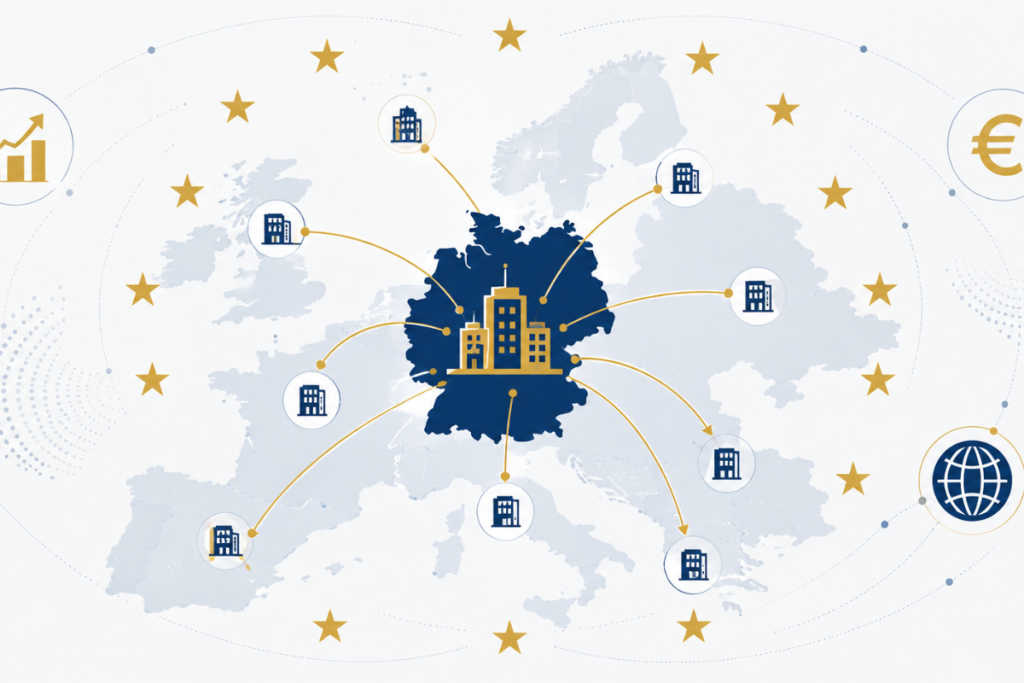
Why international companies choose Germany as their European headquarters 2026

Why International Companies Choose Germany as Their European Headquarters (2026)

The Answer Is Germany — Here Is Exactly Why Every year, thousands of international companies make the same decision. When the time comes to establish a European headquarters — a legal entity, a strategic base, a commercial hub from which to serve the entire European market — they choose Germany. Not France, despite its 68

Why International Companies Choose Germany as Their European Headquarters (2026) Read More »

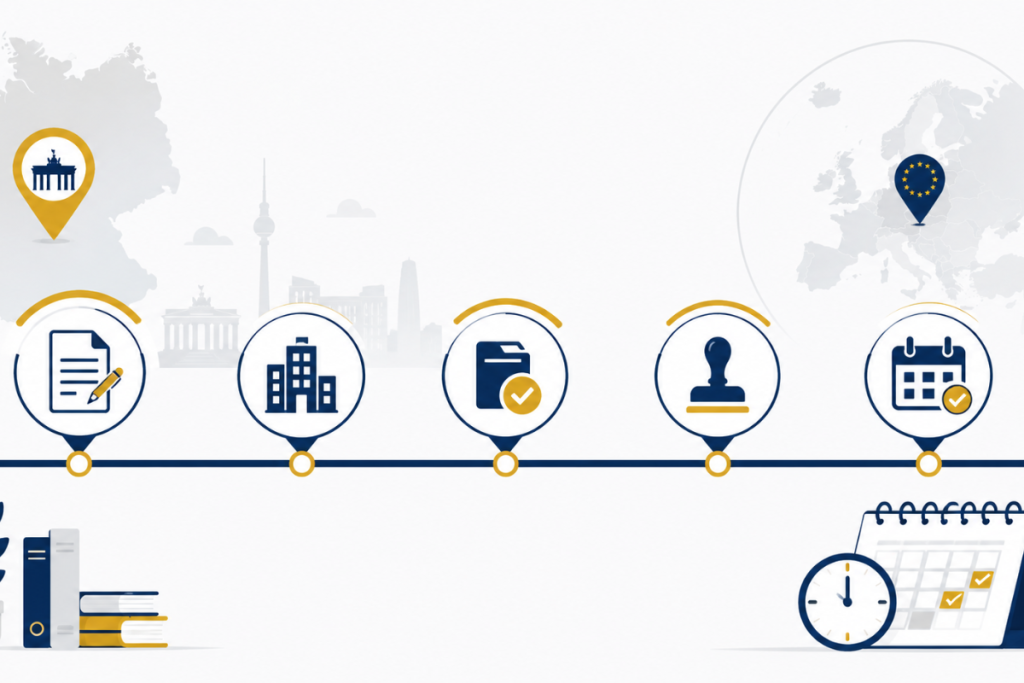
Germany company formation timeline step by step process 2026 foreign companies

Germany Company Formation Timeline: Step-by-Step Process for Foreign Companies (2026)

The Honest Timeline Most Guides Are Afraid to Give You You have decided to form a company in Germany. You have chosen your structure. Your budget is clear. Now you need the answer that determines everything else about your planning: how long is this actually going to take? Most guides say 2–4 weeks. These timelines

Germany Company Formation Timeline: Step-by-Step Process for Foreign Companies (2026) Read More »

Germany company formation cost breakdown 2026 GmbH UG foreign companies

Germany Company Formation Cost Breakdown (2026): Complete Guide for Foreign Companies

The Real Cost of Forming a Company in Germany — No Vague Ranges You are planning to set up a German company. You have researched the legal structures. You have a timeline in mind. Now you need the answer that most guides deliberately avoid giving you clearly: how much is this actually going to cost?

Germany Company Formation Cost Breakdown (2026): Complete Guide for Foreign Companies Read More »